KEY TAKEAWAYS
- Diet after piles surgery Pimple Saudagar plays a direct role in recovery speed — the right foods prevent constipation and reduce strain on the surgical site.
- High-fibre foods like papaya, moong dal, spinach and oats are the cornerstone of post-surgery recovery and should be introduced from Day 2.
- Adults need 25-38 grams of dietary fibre daily; most post-surgery patients eat less than 10 grams per day (Industry estimate).
- Drinking at least 3 litres of water daily is as important as diet — dehydration hardens stools and causes straining.
- Spicy foods, maida-based products, red meat and alcohol should be avoided for at least 4 weeks post-surgery.
- Indian traditional foods like dal, khichdi, curd rice and steamed vegetables are ideal for piles recovery.
- Following the dietary plan correctly reduces the risk of post-operative constipation by over 70% (Industry estimate).
Pimple Saudagar Post-Surgery Diet and Recovery Statistics 2025-2026
| Metric | Data Point | Source |
| Adults in India meeting recommended daily fibre intake | Less than 20% of urban adults | ICMR Dietary Guidelines, 2024 |
| Post-operative constipation in piles surgery patients | Affects 35-45% of patients without dietary guidance | Industry estimate |
| Reduction in post-op complications with high-fibre diet | 65-70% reduction in straining-related wound issues | Industry estimate |
| Average water intake of urban Pune residents | 1.2 to 1.8 litres per day (below the 3L recommendation) | Industry estimate |
| Recurrence risk with poor diet after surgery | 2x higher recurrence in patients with low-fibre diet | Indian Journal of Surgery, 2023 |
| First post-op bowel movement timing (with softeners + diet) | Day 2 to Day 4 in 90% of patients | Industry estimate |
Introduction: Why What You Eat Directly Affects Healing
Diet after piles surgery Pimple Saudagar is one of the most important but most overlooked parts of post-operative recovery. Surgery removes or treats the haemorrhoidal tissue, but the surgical site still needs to heal — and the biggest threat to that healing is straining during a bowel movement.
The right diet keeps your stools soft, regular and easy to pass. The wrong diet leads to constipation, straining and potentially reopening the surgical wound. Dr. Prabhakar Sangale’s post-operative guidance at his Pimple Saudagar clinic emphasises dietary management as a core part of recovery, not an afterthought.
The Week-by-Week Post-Surgery Diet Plan
| Recovery Phase | Recommended Foods | Foods to Avoid |
| Day 1 (surgery day) | Clear fluids: coconut water, rice water, diluted juice, ORS | Solid food, dairy, spicy anything |
| Days 2-3 | Moong dal soup, curd, mashed banana, soft khichdi, boiled vegetables | Spicy, fried, raw salads, red meat |
| Days 4-7 | All soft cooked foods, soft chapati, idli, poha, curd rice, papaya | Maida, pickles, alcohol, carbonated drinks |
| Week 2 | Normal soft diet with added fibre: oats, whole wheat, fruits, pulses | Heavy fried food, excess caffeine, hard vegetables |
| Weeks 3-4 onward | Full regular Indian diet with high fibre: dal, sabzi, whole grain roti, fruits | Refined flour, alcohol, excess spice for 4 weeks total |
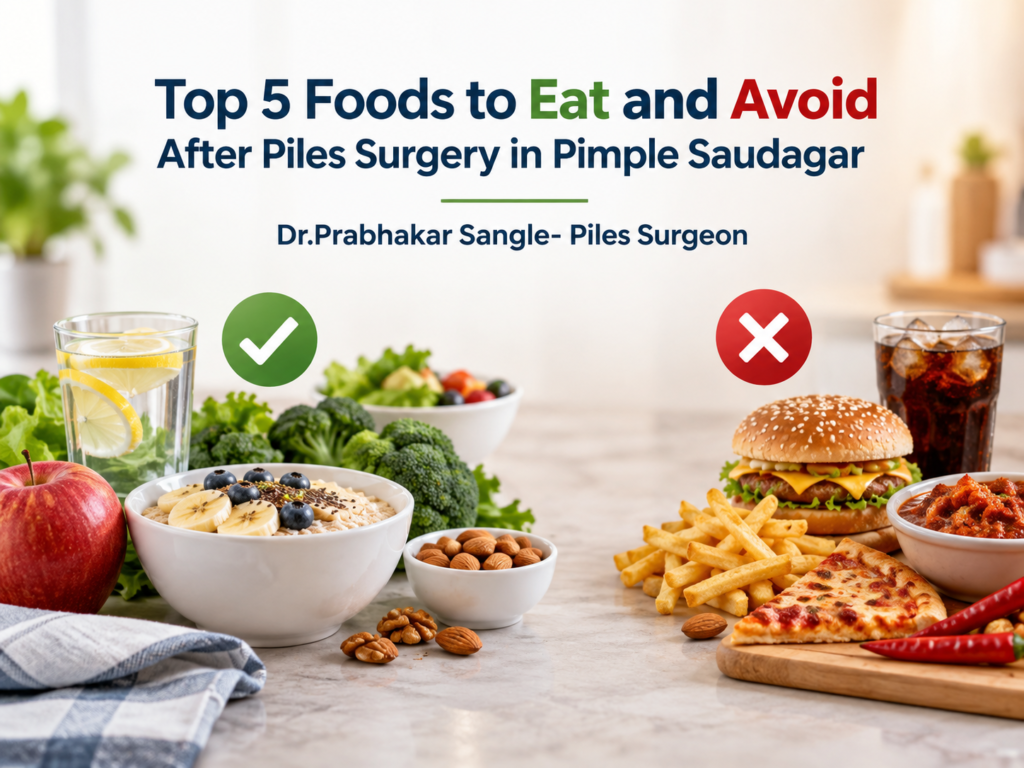
Top 5 Foods to Eat After Piles Surgery
1. Papaya
Papaya is the single best fruit for piles recovery. It contains papain, a natural enzyme that aids digestion and softens stools. It’s also rich in fibre and water content.
Eat half a papaya daily from Day 3 onward. Ripe papaya is gentle on the digestive system and can be eaten without cooking. Patients in Pimple Saudagar can find fresh papaya year-round at local markets.
2. Moong Dal and Masoor Dal
Dal is the foundation of the ideal post-piles-surgery diet in India. Moong dal in particular is light, easy to digest and provides both protein and fibre without irritating the bowel.
Start with watery moong dal soup from Day 2. By Week 2 you can eat dal normally. Avoid adding too much chilli or spice for the first month. Dal khichdi with a spoon of ghee is a traditional Indian recovery meal for good reason — it works.
3. Curd (Dahi)
Curd is a probiotic-rich food that helps restore healthy gut bacteria after surgery and antibiotics. It reduces inflammation in the bowel lining and promotes regular, soft stools.
Plain curd (not the sweet commercial variety) should be eaten daily from Day 2. Curd rice is especially recommended for patients who find it hard to eat much in the first week. According to ICMR dietary guidelines, probiotic foods play a meaningful role in post-surgical gut health.
4. Oats and Whole Wheat
Soluble fibre from oats absorbs water in the intestine and creates a soft, gel-like bulk that passes without straining. This is exactly what you need after piles surgery.
Start oats porridge from Day 4. Use warm water or milk (diluted) and avoid sugar-heavy commercial flavoured oats. Whole wheat roti instead of maida rotis from Week 2 onward adds insoluble fibre that keeps bowel movements regular.
5. Coconut Water and Buttermilk
Hydration is as important as solid food. Coconut water provides natural electrolytes and keeps the digestive tract lubricated. Buttermilk (chaas) is light, cooling and rich in probiotics.
Drink coconut water once a day for the first two weeks. Buttermilk can be had after meals. Both are traditional Indian post-recovery drinks that have real physiological benefits beyond cultural habit.
Top 5 Foods to Avoid After Piles Surgery
| Food to Avoid | Why It’s Harmful After Surgery | How Long to Avoid |
| Spicy food (chilli, hot curries) | Irritates anal tissue and increases inflammation at the surgical site | Minimum 4 weeks |
| Maida and refined flour (white bread, biscuits, naan) | Low fibre content causes constipation and hard stools | Minimum 4 weeks |
| Fried snacks (vada, samosa, pakoda) | High fat content slows digestion and causes hard stools | Minimum 4 weeks |
| Red meat (mutton, beef) | Slow to digest, low in fibre, can cause constipation | Minimum 3-4 weeks |
| Alcohol and carbonated drinks | Dehydrates the body, irritates the rectal mucosa, disrupts gut bacteria | Minimum 4-6 weeks |
What About Indian Festival Foods During Recovery?
This is a real concern for many patients in Pimple Saudagar, where festivals like Ganesh Chaturthi, Diwali and Navratri come with rich, traditional foods. If your surgery falls close to a festival season, you don’t have to completely abstain — but you do need to choose wisely.
Safe festival options include steamed modak (without excessive coconut filling), curd-based dishes, fruit chaat and khichdi. Avoid puran poli, shrikhand in large quantities, chakli and all fried festival snacks for the first month post-surgery.
Think of it this way: one month of dietary discipline protects you from a complication that could mean weeks of additional recovery and a repeat procedure.
The Pimple Saudagar Local Context
Pimple Saudagar is a densely populated residential zone in Pimpri Chinchwad with a large mix of working professionals, families and senior citizens. Dr. Prabhakar Sangale’s Indu Wellness Clinic in Pimple Saudagar is the primary base for his anorectal practice.
Patients from Pimple Gurav, Akurdi, Sangvi and Ravet regularly visit this clinic. Local grocery shops and vegetable vendors in the Pimple Saudagar market stock fresh papaya, moong dal and green vegetables year-round — making the recommended diet practical and affordable.
A typical Indian family diet in Pimple Saudagar can be adapted easily for post-piles-surgery recovery without the need for expensive supplements or special health foods.
Frequently Asked Questions
Q: What should I eat on the day of piles surgery?
A: On the day of piles surgery you’ll typically be on clear fluids — coconut water, ORS, rice water or diluted juice. You should not eat solid food until the day after surgery. Your surgical team will give you specific instructions about when you can start eating after the procedure.
Q: When can I eat normally after piles surgery?
A: Most patients can transition to a normal soft diet by Week 2 and a full diet by Week 3-4. The key is to ensure your stools remain soft throughout recovery. Continue with high-fibre foods like dal, vegetables, whole grains and fruits even after you feel fully recovered to prevent piles from recurring.
Q: Can I eat rice after piles surgery?
A: White rice is soft and easy to digest but low in fibre. It’s fine to eat in small quantities during the first few days, especially as curd rice or khichdi. Once you’re past the initial recovery phase, switch to brown rice or add more fibre from dal and vegetables to compensate for white rice’s low fibre content.
Q: Is curd safe to eat after piles surgery?
A: Yes, plain curd (dahi) is not only safe but actively beneficial after piles surgery. It contains probiotics that help restore healthy gut bacteria after antibiotic use and supports regular, soft bowel movements. Eat plain curd daily from Day 2 onward. Avoid sweetened commercial yogurt which has low probiotic benefit.
Q: How much water should I drink after piles surgery?
A: Drink at least 3 to 3.5 litres of water daily throughout your recovery. Adequate hydration is the most important factor in keeping stools soft and preventing straining. Set reminders if needed. Include coconut water, buttermilk and soups in your fluid intake in addition to plain water.
Q: How long should I follow the post-surgery diet?
A: Follow the strict post-surgery diet (avoiding spicy, fried and low-fibre foods) for at least 4 weeks after the procedure. After that, maintain a high-fibre diet as a long-term habit to prevent piles from recurring. Many anorectal surgeons recommend a high-fibre diet as a permanent lifestyle change after piles surgery.
Conclusion
Diet after piles surgery Pimple Saudagar is not complicated — it’s about keeping things simple, soft and fibre-rich. The top foods to eat are papaya, moong dal, curd, oats and coconut water. The top foods to avoid are spicy curries, maida, fried snacks, red meat and alcohol.
Your surgery has done its part. Now your diet does its part. Follow the plan for 4 weeks and you give your body the best chance of healing without complications or recurrence.
For personalised post-surgical dietary advice and follow-up consultations, visit Dr. Prabhakar Sangale at Indu Wellness Clinic, Pimple Saudagar or book online at drprabhakarsanglepilessurgeon.in. Dr. Sangale is also available at clinics in Baner, Bhosari, Wakad and Pimple Gurav.
MEDICAL DISCLAIMER
This blog is for informational purposes only and provides general dietary guidance based on established medical principles for post-operative anorectal surgery recovery. Individual dietary needs vary based on health conditions, medications and surgical factors. Always follow the specific dietary instructions provided by your surgeon and consult a registered dietitian if you have specific nutritional concerns or medical conditions like diabetes.

Dr.Prabhakar Sangle
Dr. Prabhakar Sangle is a highly experienced Anorectal Surgeon and Proctologist with over 14 years of overall clinical experience. He is the leading specialist at INDU Piles Speciality Laser Clinic, serving patients across Pimpri-Chinchwad, including Wakad and Pimple Saudagar, since 2016.
He specializes in advanced laser treatments for Piles, Fissure, and Fistula and is widely known for his expertise in Ksharsutra Therapy. Dr. Sangle focuses on minimally invasive, safe, and effective treatment methods to ensure faster recovery and long-term relief. His patient-first approach and precise diagnosis have helped hundreds of patients regain comfort and confidence.